

Your website pulls together every element of your brand and is often where a potential client first decides whether to trust you. Choosing the right freelance web designer, in London or beyond, shapes that first impression more than any template or tool.
This guide covers what to work out before you approach anyone, why a website designer is still worth hiring when you could build something yourself (yes, even with AI), how to choose a platform, and how to tell whether a designer will deliver on what they promise.
Start by knowing what you need
A freelance web designer can only tell you whether your project suits their skills, workload and timeframe if you can describe it. Four questions are worth answering first.
Bespoke or template?
Do you want a bespoke website designed around your brand, or a simpler site based on a template so you can launch quickly?
Selling or informing?
Should the site guide visitors towards your products or services, or is its job to provide information and advice?
Taking payment?
Shopping cart features and secure payment options change the scope of the project, and often the choice of platform.
Who looks after it?
Will you update the content yourself through a content management system, or would you rather your designer handled changes for you?
Why work with a website designer at all?
It has never been easier to build a website yourself. Templates are plentiful, the platforms are friendly, and AI will produce a page in seconds. So it is a fair question.
The answer is that building a website and designing one are different jobs. The tools will give you a page. They will not tell you what belongs on it, what to leave out, how the pieces should sit together, or how a first-time visitor will move through it. That judgement is what you are hiring.
“The tools will give you a page. They will not tell you what belongs on it.”
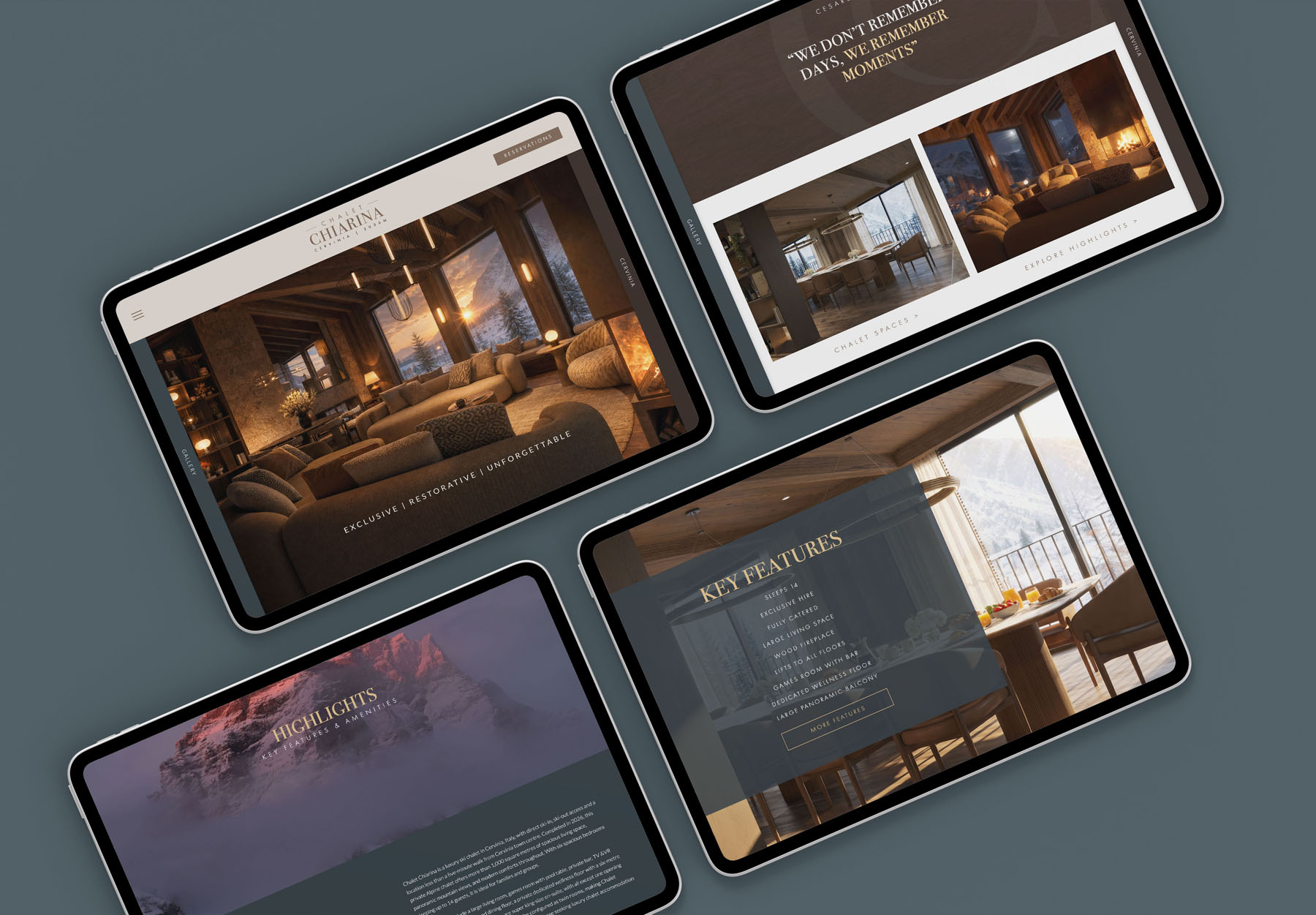
“But I could just use AI”
You could, and the result may well be competent. But a designer building their hundredth website, with AI to help them, is going to do a much better job than you building your first one. Even using AI tools, there are a lot of mistakes to learn from.
The most valuable judgement call is sometimes ‘that idea won’t work because…’, not ‘sure, let’s do whatever you tell me to’.
The difference is what the person brings to the tool.
The questions to ask
Much of the work happens before anything is built. An experienced designer knows what to ask about your audience, your offer and your goals.
The prompts to use
AI answers the question it is given. Better direction produces a better result.
The best way, not the average way
Left to itself, AI reaches for the most common way to construct a page. A designer is looking for the best one for your brand.
Years of real feedback
Enhancing websites over many years, and observing how visitors engage with them, builds an instinct no prompt can supply.
A good web designer uses AI to assist and elevate what they do.
Choosing a platform
The platform your site is built on affects how it is edited, maintained and extended. A good freelance web designer will recommend one based on your needs. These are the three I work with.
Squarespace
An all-in-one hosted platform. Polished templates, straightforward editing and very little to look after.
WordPress
The most flexible of the three. A full content management system with plugins for almost any feature, suited to larger or growing sites.
Custom HTML
A lightweight build with no CMS, plugins or database, so there is nothing to maintain. Suited to sites that rarely need to change.
For most businesses an established platform is the sensible choice, and the reasons are practical ones.
- SupportHelp is available when something goes wrong.
- TemplatesA tested starting point that can be customised to your brand.
- PluginsAdd bookings, shops and forms without building from scratch.
- Content managementUpdate text, images and blog posts yourself.
- RefinementYears of testing across a vast number of websites.
- SecurityActively maintained, with regular updates.
- Bug fixingProblems are found and fixed by a dedicated team.
How to judge a freelance web designer
Once you have a shortlist, check that each designer can deliver on what they promise. Their previous work is the best evidence you have.
Explore their work
Look beyond whether a site is attractive. Is it clear what the business does? Does it work as well on a phone as on a desktop (responsive web design is a baseline now)?
Ask about the brief
Ask what the client asked for, and why the designer took the approach they did to the website (and the logo design, if they handled it).
Speak to a past client
If you can, ask how they found the experience: the timeline, and whether their feedback was listened to. A site can look superb and still have been a difficult project.
A word on price
It is tempting to choose the cheapest quote, but that rarely gets you the quality or breadth of service you need. The most expensive quote does not guarantee the best website either. Look at what you are getting for the price, and whether the designer can show that they deliver it.
After launch
A website is an ever-evolving thing. Once the design is complete it needs content, adjustment as your audience changes, and updates over time. Decide early whether you want to take care of this yourself or have your designer do it for you, and choose a platform to match.
Looking for a freelance web designer in London?
I design websites for premium and high end brands, with every project handled personally from the first conversation to the final file.
Schedule a discovery call View my web design service